
Dining in Espoo and central Helsinki offers two genuinely different experiences. Helsinki’s centre tends toward urban density, with a high concentration of fine dining, international cuisines, and a fast-paced restaurant culture. Espoo, by contrast, offers a more relaxed, neighbourhood-rooted atmosphere, often shaped by its coastal geography and quieter residential character. The sections below explore the key differences across atmosphere, food culture, and what each setting does best.
Is the dining atmosphere different in Espoo compared to Helsinki?
Yes, the dining atmosphere in Espoo is noticeably different from central Helsinki. Helsinki’s restaurant scene is faster, more cosmopolitan, and driven by trend-conscious dining. Espoo tends to offer a calmer, more intimate setting where restaurants feel embedded in their local communities rather than competing for foot traffic in a busy city centre.
In practical terms, this means that dining in Espoo often feels less rushed. Tables are easier to come by, service tends to be more personal, and the surroundings frequently include natural features such as waterfront views or green spaces that are harder to find in the heart of Helsinki. For diners who value atmosphere as much as the food itself, this distinction matters considerably.
Helsinki’s central dining scene excels at energy and variety, which suits certain occasions perfectly. But for a meal where the setting is part of the experience, Espoo’s quieter, more scenic environment offers something genuinely distinct.
What types of restaurants are more common in Espoo than Helsinki?
Restaurants in Espoo tend to skew toward family-run establishments, traditional Finnish dining, and venues that take advantage of natural surroundings such as waterfront locations. Helsinki’s centre, by comparison, has a higher concentration of international restaurants, trendy concept dining, and high-turnover casual spots aimed at the lunch and tourism crowd.
This does not mean Espoo lacks quality or variety. Rather, its restaurant landscape reflects the character of the area itself: residential, coastal, and community-oriented. Locally owned restaurants with long histories are more common here, and many have built their reputations over decades rather than through social media visibility.
Seafood restaurants are particularly well represented in coastal parts of Espoo, where proximity to the water makes fresh fish and shellfish a natural focus. Traditional Finnish buffet dining is also more common in Espoo than in the centre of Helsinki, where international formats have largely displaced it.
How does the food culture in Espoo reflect its coastal setting?
Espoo’s coastal setting has a direct influence on its food culture, particularly in areas like Haukilahti. Proximity to the sea means that fresh, seasonal fish and seafood feature prominently on local menus. The rhythm of the seasons shapes what is available and celebrated, with dishes following the natural calendar of Baltic catches and Nordic harvests.
This connection to place gives Espoo’s food culture a grounded quality. Menus are less likely to chase global trends and more likely to reflect what is genuinely fresh and local at any given time of year. Herring, perch, pike-perch, and other Baltic fish appear regularly, prepared in both traditional and contemporary ways.
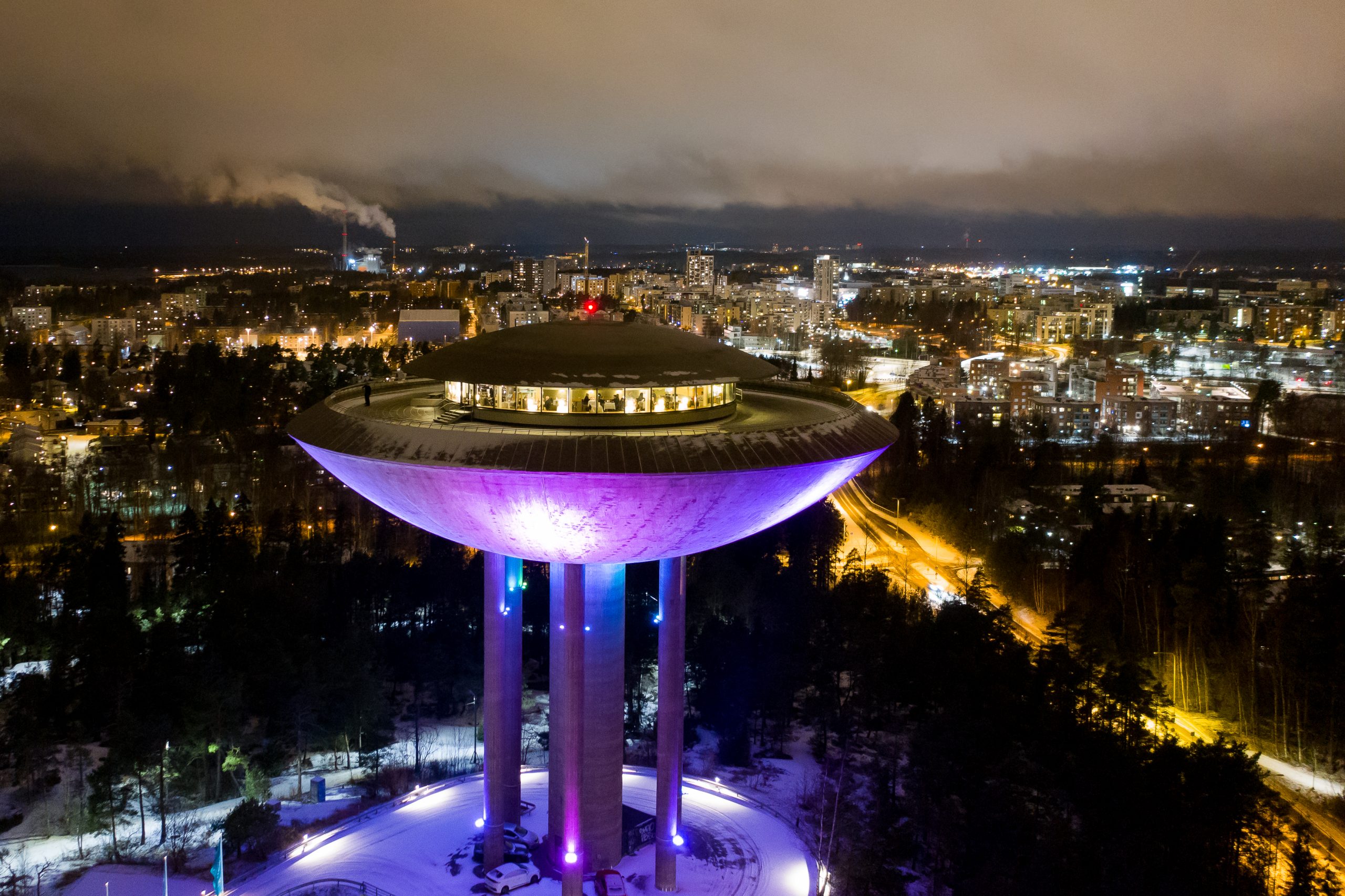
We experience this directly at Haikaranpesä, where our position in the Haukilahti water tower gives us panoramic views across the sea and shapes the philosophy behind our kitchen. The coastal setting is not just a backdrop; it informs what we cook and how we think about the dining experience as a whole.
Is it worth travelling from Helsinki to dine in Espoo?
Yes, travelling from Helsinki to dine in Espoo is genuinely worth it, particularly if you are looking for something beyond the standard city centre restaurant experience. The journey from central Helsinki to coastal Espoo takes roughly 20 to 30 minutes by public transport or car, and what you gain in atmosphere, scenery, and distinctiveness makes the trip worthwhile for a special meal.
The strongest argument for making the trip is the combination of setting and food culture that simply does not exist in central Helsinki. Waterfront dining with open views, a quieter pace, and menus rooted in Finnish coastal tradition offer a meal that feels like a genuine escape rather than just another restaurant visit.
For visitors to the Helsinki region in 2026, adding a dining excursion to Espoo also provides a more complete picture of what the area has to offer beyond the capital’s well-trodden tourist circuit. Locals who live in Helsinki often make the trip for exactly this reason: a change of pace that does not require leaving the metropolitan area.
What makes a traditional Finnish buffet different from a restaurant menu?
A traditional Finnish buffet, known as a noutopöytä, differs from a standard restaurant menu in both format and philosophy. Rather than ordering individual dishes, guests serve themselves from a spread of prepared dishes that typically includes fish, meat, salads, bread, and seasonal accompaniments. The emphasis is on variety, abundance, and communal enjoyment rather than curated individual portions.
The cultural significance of the Finnish buffet goes beyond convenience. It reflects a Scandinavian tradition of sharing food and celebrating seasonal ingredients together. A well-prepared noutopöytä changes with the time of year, featuring preserved fish and root vegetables in winter and lighter, fresher preparations in summer.
From a practical standpoint, the buffet format also encourages a more relaxed pace of dining. There is no fixed sequence of courses, no waiting between dishes, and no pressure to make a single choice from a menu. This makes it particularly well suited to group dining, celebrations, and occasions where the meal itself is meant to be the main event rather than a prelude to something else.
If you are curious about what a traditional Finnish dining experience looks like in a genuinely memorable setting, we warmly invite you to explore our seasonal Finnish lunch menu options at Haikaranpesä. Situated at the top of the Haukilahti water tower with views stretching across the sea toward Helsinki, our noutopöytä brings together seasonal Finnish flavours and a setting unlike anywhere else in the region. Reserve your table at Haikaranpesä to experience it for yourself.